
PCIe Gen5 NVMe SSDs double the bandwidth of Gen4 drives, offering superior speeds for demanding tasks. However, real-world gains depend on your workload and hardware compatibility.
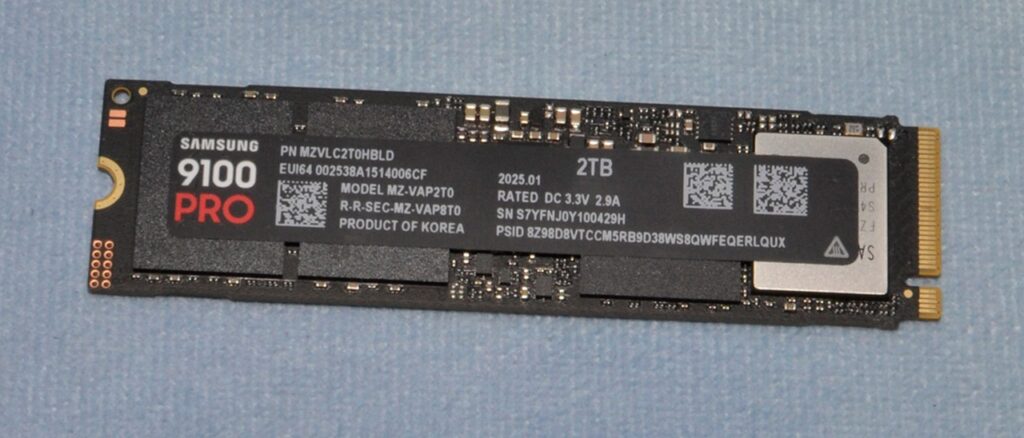
What is NVMe SSDs?
NVMe SSDs leverage PCIe lanes directly to the CPU, bypassing SATA bottlenecks. They use the NVMe protocol optimized for flash storage, supporting up to 65,536 queues with 65,536 commands each versus SATA’s single queue of 32.
Speeds soar to 3,500 MB/s on PCIe Gen3, 7,000 MB/s on Gen4, and 14,000 MB/s on Gen5 for sequential reads. Latency drops to 10-20 microseconds, enabling rapid random access crucial for gaming and video editing.
Formed as compact M.2 drives (M key), NVMe SSDs suit modern motherboards. They generate more heat and consume slightly higher power, requiring good airflow in gaming PCs.
Key Specifications
Gen5 leverages PCIe 5.0’s 32 GT/s per lane versus Gen4’s 16 GT/s, yielding up to 15.8 GB/s theoretical bandwidth on x4 links compared to 7.9 GB/s. This enables peak sequential reads over 14,000 MB/s and writes up to 12,000 MB/s, roughly doubling Gen4’s 7,000/6,500 MB/s limits.
Random performance surges too: Gen5 exceeds 2.5 million IOPS versus Gen4’s 1 million, with latency dropping to 10-15 microseconds from 20-30.
Performance Benchmarks
| Metric | PCIe Gen4 NVMe | PCIe Gen5 NVMe |
| Sequential Read | ~7,000 MB/s | ~14,000 MB/s |
| Sequential Write | ~6,500 MB/s | ~12,000 MB/s |
| Random Read IOPS (4K) | ~900K-1M | 1.5M-2.5M |
| Latency | 20-30 µs | 10-15 µs |
| Bandwidth (x4) | 7.9 GB/s | 15.8 GB/s |
In tests, Gen5 cuts AI training times by 50% over Gen4’s 30% gains versus older tech, and handles 400+ VMs in virtualization.
Also Read: NVMe vs SATA SSD – Is NVMe Really Worth It in 2026?
Real-World Differences
Gaming and Content Creation
NVMe shines in PC gaming rigs with DirectStorage tech, streaming assets directly to GPU for near-instant loads.
Everyday Computing
Office work, browsing, and streaming see minimal NVMe gains over SATA. Both boot Windows 11 quickly compared to HDDs’ 30+ seconds.
Professional Workloads
Servers and data centers favor NVMe for 2-3x IOPS per watt efficiency. Content creators editing raw footage or running VMs benefit most.
Cost and Value Analysis
NVMe SSDs cost 20-50% more per GB than SATA. A 1TB SATA might run ₹4,000-5,000 in India, while NVMe hits ₹6,000-8,000.
Prices drop yearly; Gen4 NVMe now rivals SATA value for performance seekers. Check Amazon/Flipkart for deals.
Conclusion
Gaming sees minimal gains—both load modern titles instantly, as DirectStorage saturates Gen4 bandwidth. For your content creation and 4K editing, Gen5 accelerates large file transfers by 60% in data analytics.
Gen5 shines in servers, 8K video, and HPC, but throttles without robust cooling due to higher power draw.
Cost and Compatibility
Gen5 costs 2x more per GB than Gen4, though prices fall in 2026. Requires PCIe 5.0 motherboards (post-2023 platforms); Gen4 drives work backward.
For gaming rigs or Siliguri PC builds, Gen4 offers best value—upgrade to Gen5 only for pro workloads.
FAQ
Q1. Is NVMe faster than SATA SSD?
A: Yes, NVMe SSDs are much faster than SATA SSDs because they use the PCIe interface, which provides higher data transfer speeds.
Q2. Is NVMe worth it for normal users?
A: For daily tasks like browsing and office work, SATA is enough. But NVMe is worth it if you want faster boot time and file transfers.
Q3. Can I use NVMe in an old PC?
A: Only if your motherboard supports M.2 NVMe slots. Otherwise, it won’t work without an adapter.
Q4. NVMe vs SATA for gaming – which is better?
A: NVMe is faster, but in most games, the difference is very small. SATA SSD is still good for gaming.