
DDR4 and DDR5 RAM represent two generations of memory technology with DDR5 dominating new builds. For gamers and content creators in India, choosing between them depends on budget, performance needs, and platform compatibility in March 2026.
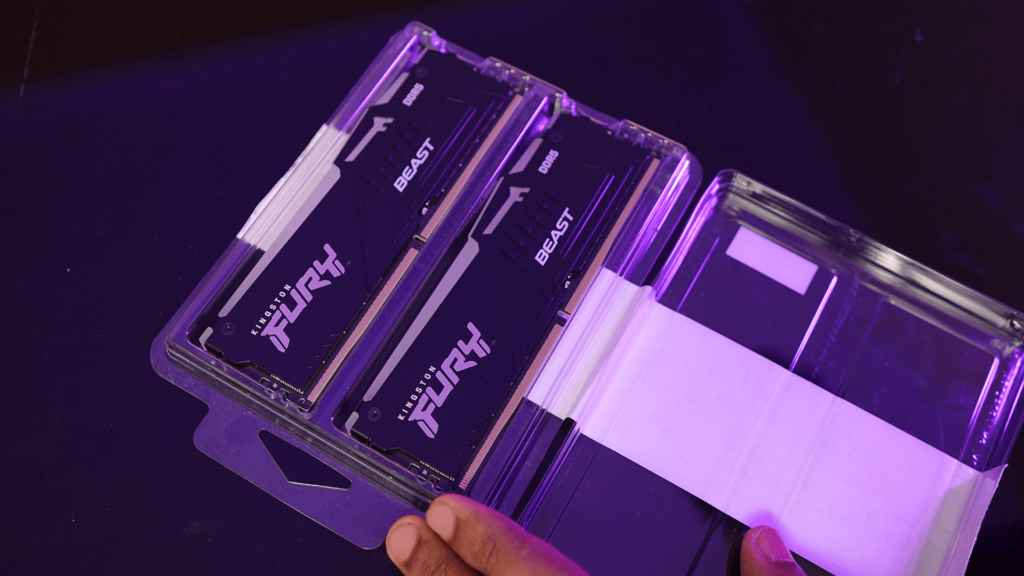
Core Technology Differences
DDR5 operates at higher base speeds starting from 4800 MT/s versus DDR4’s 2133-3200 MT/s JEDEC specs. It features two independent 32-bit channels per module doubling effective bandwidth over DDR4’s single 64-bit channel.
DDR5 introduces on-module PMIC for 1.1V operation versus DDR4’s 1.2V, improving efficiency by 20-30%. Banks increase from DDR4’s 16 (4 groups) to DDR5’s 32 (8 groups) with BL16 burst length for better multitasking.
Capacity jumps dramatically—DDR5 supports 128GB per DIMM while DDR4 maxes at 32-64GB. This suits your content creation workloads handling large video files and VMs.
Also Read: DRAM vs DRAM-less SSD – Which One Should You Buy?
Performance Benchmarks
| Metric | DDR4 (3600MHz CL16) | DDR5 (6000MHz CL36) |
| Bandwidth (Dual Channel) | ~57 GB/s | ~96 GB/s |
| Latency (Real World) | 8-10ns | 12-15ns initially |
| Gaming FPS @1080p Avg | Baseline | +5-15% uplift |
| Productivity (Cinebench) | Baseline | +10-20% multi-core |
| Geekbench 6 Single-Core | ~2800 pts | ~3388 pts |
DDR5 shows 11% average gaming gains at 1080p with 35% better 1% lows in CPU-bound titles like Star Wars Jedi: Survivor. At 1440p/4K, GPU bottlenecks minimize differences to 3-7%.
Content creation benefits more: DDR5 accelerates Premiere Pro exports by 15-25% and Blender renders by 20% due to higher bandwidth. For your YouTube editing workflow, DDR5 handles 4K timelines smoother.
Gaming Performance Breakdown
DDR5 kits at 6000MHz deliver playable uplifts in simulation-heavy games. Assetto Corsa Competizione sees DDR5 at 170fps vs DDR4’s 160fps; Watch Dogs Legion gains 14% at 1080p.
Minimum framerates improve dramatically—crucial for stutter-free gaming on your PC rig. DDR5’s extra banks reduce frame pacing issues during asset streaming.
Budget DDR5 (5200-5600MHz) closes the gap with high-end DDR4 (3600MHz+), making speed gains cost-effective now.
Compatibility and Platform Support
DDR4 and DDR5 use physically different slots—non-interchangeable. Intel’s LGA1700 (12th-14th Gen) and AMD AM4/AM5 support DDR4; newer Arrow Lake (LGA1851) and AM5 mandate DDR5.
Don’t Miss: Best Gaming PC Build Under ₹1 Lakh (2026) – Ultimate Performance Combo 🔥
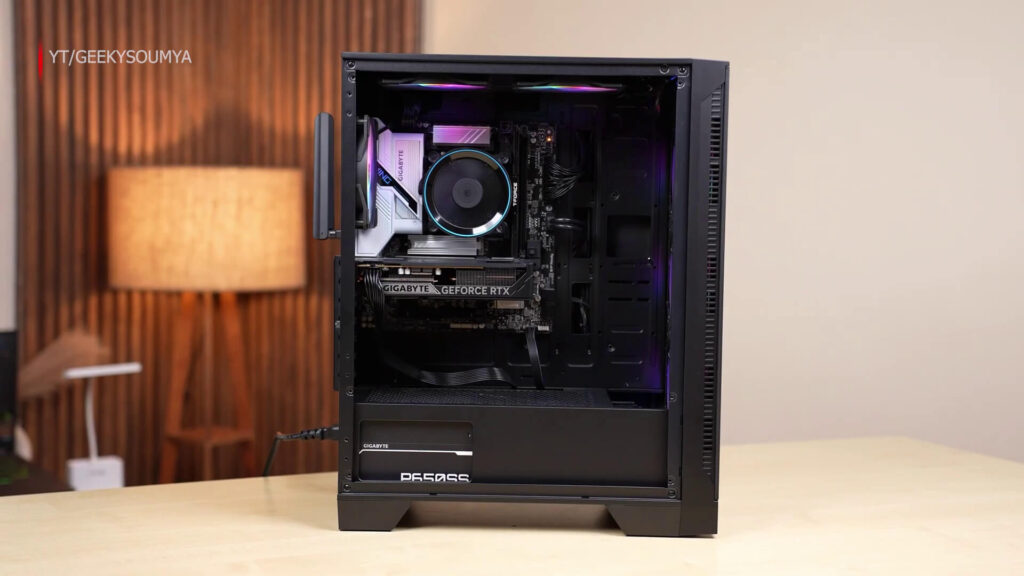
AM5 motherboards offer DDR4 compatibility via adapters in some cases, but native DDR5 unlocks full performance. Verify your motherboard’s QVL list for stability.
For Siliguri PC builders, DDR4 upgrades remain viable for existing Intel 13th/14th Gen systems. New builds demand DDR5 motherboards starting ₹12,000.
Pricing and Value in India (2026)
DDR5 prices dropped 40% since 2025 but remain premium due to AI demand.
| Capacity/Speed | DDR4 Price (₹) | DDR5 Price (₹) |
| 16GB (3200MHz) | 2,500-3,000 | 4,500-6,000 |
| 32GB (6000MHz Kit) | 5,000-6,500 | 11,000-14,000 |
| 64GB Kit | 12,000 | 22,000-28,000 |
DDR4 offers unbeatable value for 1080p gaming and basic content creation. DDR5 justifies cost for 1440p+, heavy multitasking, or future-proofing.
Check Flipkart/Amazon for brands like Corsair Vengeance, G.Skill Trident Z5. Local deals in West Bengal often hit during sales.
Power Efficiency and Thermals
DDR5 sips power at 1.1V versus DDR4’s 1.2V, with PMIC handling regulation for cooler operation under load. Idle draw drops 20%, extending laptop battery life.
High-speed DDR5 generates more heat (45-60°C vs DDR4’s 40-50°C), needing good case airflow for gaming rigs. Your custom PC builds benefit from tower coolers.
Overclocking favors DDR5—stable 7200MHz kits emerging versus DDR4’s 4000MHz ceiling for most users.
Content Creation Applications
For your tech blogging and video editing:
- Adobe Suite: DDR5 accelerates Photoshop AI tools and Premiere multicam by 20%.
- Virtual Machines: 128GB DDR5 capacity runs multiple VMs without swapping.
- Streaming: OBS encoding smoother with DDR5’s bandwidth during 4K60 capture.
DDR4 suffices for 1080p editing; DDR5 transforms 4K workflows matching your YouTube ambitions.
Pros and Cons
DDR4 Advantages
- Lower cost per GB.
- Mature ecosystem, tight timings available.
- Perfect for budget gaming upgrades.
DDR4 Drawbacks
- Bandwidth ceiling limits future apps.
- End-of-life for new platforms.
DDR5 Advantages
- Double bandwidth, higher capacities.
- Better efficiency, future-proof.
- Significant productivity gains.
DDR5 Drawbacks
- Higher upfront cost.
- Higher latency at equal clocks.
Recommendations for Your Setup
Budget Gaming (₹50k-80k): 32GB DDR4-3600 CL16. Excellent value matching your hardware research habits.
Creator/Gaming Hybrid (₹1L+): 32GB DDR5-6000 CL36. Pairs with NVMe SSDs from your previous upgrade for seamless 1440p performance.
Future-Proof Build: 64GB DDR5-6400 on AM5 platform. Aligns with DDR5 pricing trends you’re tracking.
Test stability with MemTest86 post-install. For Siliguri availability, MD Computers or PrimeABGB ship reliably.
Choose DDR5 for new PCs; stick with DDR4 upgrades. Both outperform bottlenecks in modern gaming/content workflows.
FAQ
Q1. Is DDR5 better than DDR4?
A: Yes, DDR5 offers higher speed and better efficiency compared to DDR4, but it is more expensive.
Q2. Should I upgrade to DDR5?
A: Upgrade only if you are building a new PC. For existing systems, DDR4 is still good enough.
Q3. DDR4 vs DDR5 gaming difference?
A: The gaming performance difference is small in most cases, especially in mid-range setups.
Q4. Is DDR5 future-proof?
A: Yes, DDR5 is more future-proof as newer systems and CPUs are moving towards it.