
If you are building or upgrading a gaming PC in 2026, one question keeps coming up: is 8GB VRAM enough for gaming in 2026? The short answer is yes for 1080p gaming with sensible settings, but no for a comfortable 1440p, ray tracing, or future-proof high-end experience.

VRAM is your graphics card’s local memory. It stores textures, shaders, frame buffers, and assets that the GPU needs instantly. When a game needs more VRAM than your card has, you may see stuttering, texture pop-in, lower-resolution textures, or sudden FPS drops. In 2026, 8GB is no longer “plenty,” but it is still useful for the right kind of gamer.
Also Read: Why USB C Is Replacing Everything
What 8GB VRAM Can Handle
For 1080p gaming, 8GB remains a workable capacity. Esports titles, older AAA games, indie games, and well-optimized modern releases can run comfortably at medium or high settings. Many popular games still fit within an 8GB frame buffer at 1080p, especially if you avoid extreme texture packs.
If you play games like CS2, Valorant, Fortnite, Rocket League, GTA V, older Call of Duty titles, or competitive multiplayer games, an 8GB GPU can still deliver a good experience. At 1080p medium settings, the performance gap between 8GB and 16GB cards is often small—around 2–3% in broad testing.
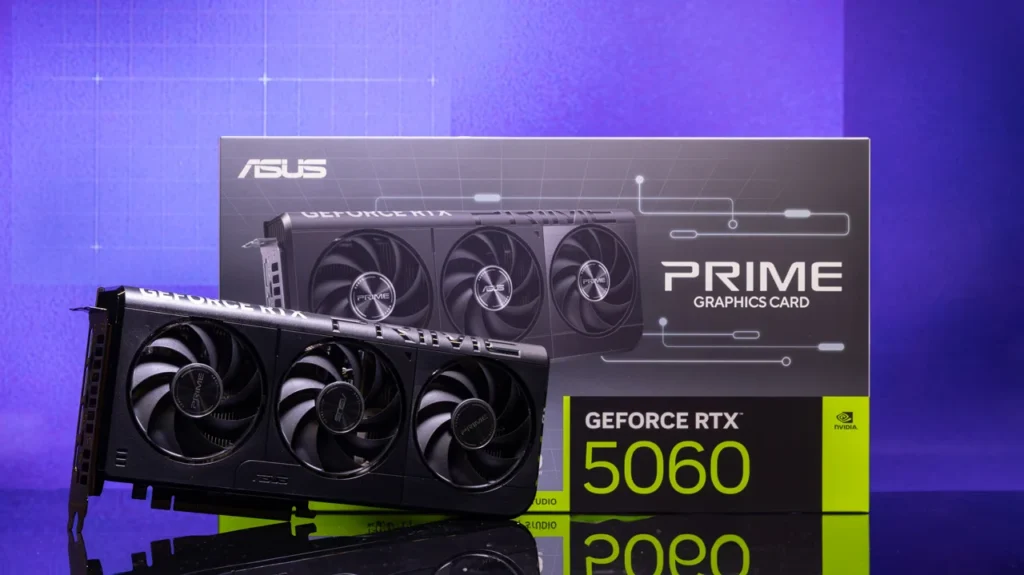
The practical rule is simple: 8GB is fine for 1080p, but not for maxing out every setting. In demanding AAA games, Ultra textures can push memory use beyond 8GB even at Full HD. For example, Avatar: Frontiers of Pandora can use roughly 10.7GB at 1080p Ultra, while Horizon Forbidden West may need more than 9.5GB at very high settings.
Where 8GB Starts to Struggle
The real problem begins at 1440p. Higher resolution increases the frame buffer requirement, and modern texture-heavy games can quickly exceed 8GB. You may still get playable FPS, but the experience becomes less consistent: stutter, delayed texture streaming, and frame-time spikes become more common.
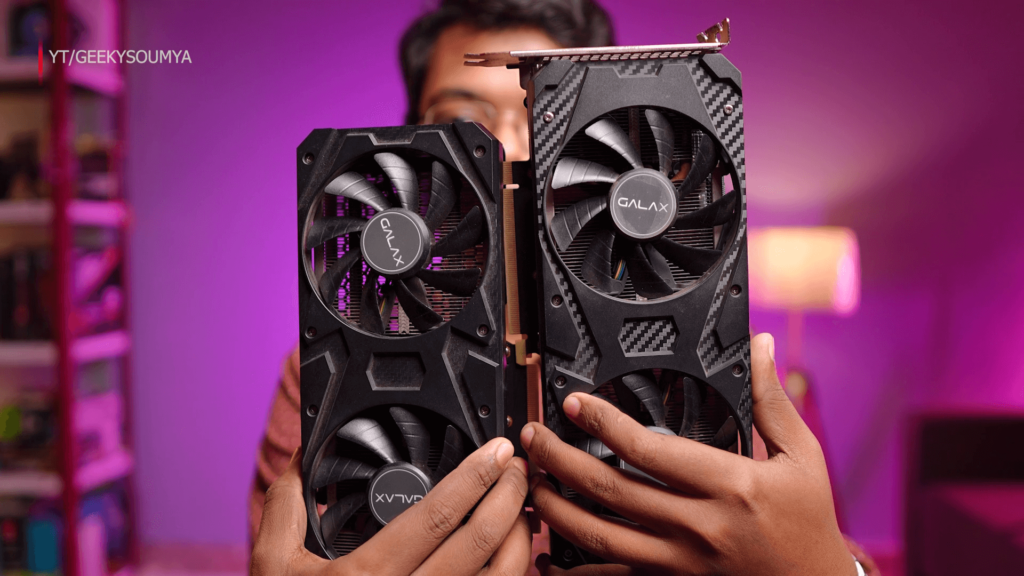
Ray tracing makes this worse. Ray-traced lighting, reflections, and path tracing require additional memory. Testing summarized by Newegg found that 8GB cards were about 26% slower than 16GB cards at 1080p Ultra in ray-traced titles, and nearly 40% slower at 1440p Ultra with ray tracing.
So, if your goal is:
- 1080p high settings, no ray tracing: 8GB is still acceptable.
- 1080p Ultra in heavy AAA games: You may need to reduce textures.
- 1440p gaming: 12GB is a more comfortable minimum; 16GB is better.
- Ray tracing or path tracing: 8GB is not ideal.
- 4K gaming: 8GB is not recommended.
Why VRAM Matters More Than Before
Modern games use larger textures, more detailed assets, and more complex rendering techniques. Even if a GPU has strong raw performance, it can be limited by VRAM capacity. This is why some 8GB cards perform well in one game but struggle badly in another.
Frame generation can also increase VRAM pressure. While upscaling technologies such as DLSS, FSR, and XeSS reduce GPU workload, they do not magically remove the need for texture memory. In some games, enabling frame generation or high-quality ray tracing can push an 8GB card closer to its limit.
Another issue is texture streaming. When VRAM runs out, the game may move assets between system RAM and VRAM. That can cause stutters, especially in open-world games where environments load continuously. This is why VRAM capacity affects not only average FPS but also smoothness.
8GB vs 12GB vs 16GB
| Use case | Recommended VRAM in 2026 |
|---|---|
| Esports and older games at 1080p | 8GB is enough |
| Modern AAA games at 1080p high | 8GB works, but texture settings may need adjustment |
| Modern AAA games at 1080p Ultra | 12GB is safer |
| 1440p gaming | 12GB minimum, 16GB preferred |
| Ray tracing at 1080p/1440p | 12GB or 16GB recommended |
| 4K gaming | 16GB or more |
| Heavy mods and HD texture packs | 16GB recommended |
For a new budget build, 8GB can still make sense if the price is significantly lower and your monitor is 1080p. But if the price difference between an 8GB and 12GB/16GB version is small, the higher-VRAM model is usually the better long-term purchase.
Should You Buy an 8GB GPU in 2026?
Buy an 8GB GPU if:
- You play at 1080p.
- You mainly play esports, multiplayer, indie, or older AAA games.
- You are okay using High instead of Ultra textures.
- You want the lowest possible GPU price.
- You plan to upgrade again within two to three years.
Avoid 8GB if:
- You want a GPU to last four to five years.
- You play at 1440p or 4K.
- You want ray tracing.
- You play the newest open-world AAA releases.
- You use HD texture packs or heavy mods.
- You want fewer stutters and less settings management.
In India, where GPU prices can make 8GB cards attractive, the decision often comes down to value. An 8GB card may be a smart budget choice today, but 12GB or 16GB gives you more breathing room as games continue to grow heavier.
Final Verdict
Is 8GB VRAM enough for gaming in 2026? Yes—but only as a budget 1080p option. It is still capable for esports, older titles, and many modern games at medium or high settings. However, it is no longer a comfortable choice for Ultra textures, 1440p gaming, ray tracing, or long-term future-proofing.
If you are buying new in 2026, treat 8GB as the minimum, not the ideal. For a better balance of performance and longevity, choose 12GB for 1080p/1440p and 16GB for high-refresh 1440p, ray tracing, or 4K gaming.