
If you’ve ever shopped for a phone, a smartwatch, or even outdoor lighting, you’ve probably seen codes like IP54 and IP68 printed on the box. Most of us nod along, assuming IP68 is simply “better.” But what do these codes actually mean — and does the difference matter for you? Let’s break down the IP54 vs IP68 question in plain language, without the engineering jargon.
What Does an IP Rating Actually Tell You?
IP stands for Ingress Protection — a standardized measure of how well a device keeps out two things: dust and water. The two digits after “IP” each tell a different story. The first digit covers solids (like dust), and the second covers liquids (like water). So when you compare IP54 vs IP68, you’re really comparing two separate protection levels stacked together.

Neither rating means a device is “waterproof,” by the way. That word doesn’t exist in the official standard — only degrees of water resistance .
IP54 vs IP68: The Key Differences
Here’s where the gap between these two ratings becomes clear:
| Aspect | IP54 | IP68 |
|---|---|---|
| Dust protection | Some dust can get in, but not enough to cause harm | Fully dust-tight — zero ingress |
| Water protection | Handles splashes from any direction | Survives continuous immersion in water |
| Survives a dunk? | No | Yes, under tested conditions |
| Typical devices | Budget phones, factory equipment, outdoor junction boxes | Flagship phones, underwater lights, submersible pumps |
| Cost | More affordable | Higher, due to extra sealing and engineering |
The first digit tells part of the story: IP54’s “5” means the device is dust-protected, meaning a little dust might sneak in without affecting performance. IP68’s “6” means it’s completely sealed against dust — nothing gets through.
The second digit is where the real difference lives. A “4” rating means the device can shrug off water splashing against it from any direction — think rain or a spilled drink. An “8” means the device can be fully submerged in water beyond one meter deep, with the exact depth and duration set by the manufacturer (commonly 1.5 to 2 meters for 30 minutes on smartphones).
How Do Phones Even Pass IP68 Testing?
This is where it gets interesting. Manufacturers test IP68 devices under the IEC 60529 standard, and the process is more demanding than you might expect.
For the dust side, the device sits in a sealed chamber filled with fine talcum powder for around eight hours. Inspectors then open it up and check for any particles inside — for a “6” rating, they need to find absolutely nothing.
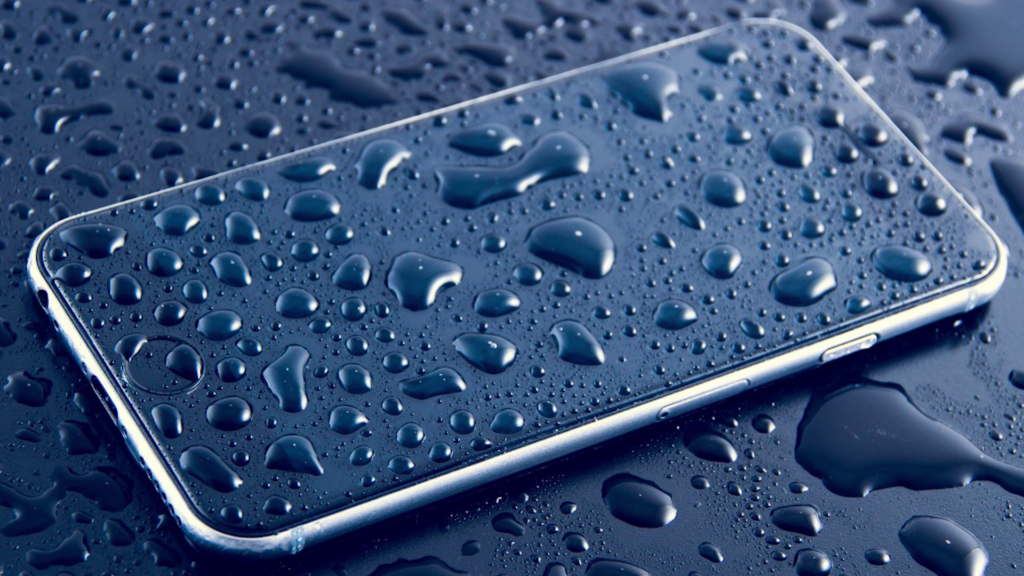
For the water side, the phone gets submerged in a tank to the manufacturer’s declared depth — usually 1.5 meters for 30 minutes in still, fresh water at room temperature. Afterward, it’s inspected for moisture and tested to confirm everything still works .
What makes this possible inside the phone itself is a network of tiny seals: adhesive gaskets bonding the screen and back panel to the frame, rubber O-rings around buttons and ports, hydrophobic mesh over the speakers, and breathable membranes that equalize air pressure without letting water in. Modern production lines even run a vacuum leak test on every single unit to confirm there are no gaps.
Which Rating Should You Choose?
The honest answer depends on how you actually use your device — not on which number sounds more impressive.
Go with IP54 if your device lives in relatively dry, everyday conditions. It handles rain, splashes, and humid environments just fine. It’s the practical choice for budget-friendly phones, outdoor electrical boxes, and equipment in workshops or covered areas. You save money without paying for protection you’ll rarely need.

Go with IP68 if your device faces serious exposure — poolside afternoons, beach trips, muddy job sites, or the occasional accidental drop into the sink. If you’ve ever fished a phone out of a toilet or watched one tumble into a puddle, you already understand the appeal. Always keep in mind that a phone or device with IP Rating is not completely waterproof. It may get water damage under certain conditions, and if it does, then nobody on earth will give you the warranty. Even in some Samsung devices, a green line issue can occur after the device falls into water.
A Few Honest Caveats
Before you assume IP68 makes a phone invincible, keep these realities in mind:
- Test conditions are ideal. Labs use still, fresh water at room temperature. Real life involves moving water, pressure from motion, chlorine, saltwater, and heat — none of which are part of the test.
- The rating fades with age. Adhesives weaken, gaskets stiffen, and any repair that opens the phone can compromise the original seals .
- It’s pass/fail, not a warranty. IP68 means the device survived one specific lab test on a new unit. Water damage often isn’t covered under warranty, even for IP68 devices .
The Bottom Line on IP54 vs IP68
When it comes down to IP54 vs IP68, you’re choosing between “good enough for everyday splashes” and “ready for full submersion.” IP54 keeps dust and drizzle at bay at a friendlier price. IP68 buys you genuine peace of mind around water — as long as you remember that even the best seals have limits.
Match the rating to your real life, not to the biggest number on the spec sheet. That’s the smartest way to read any IP label.