
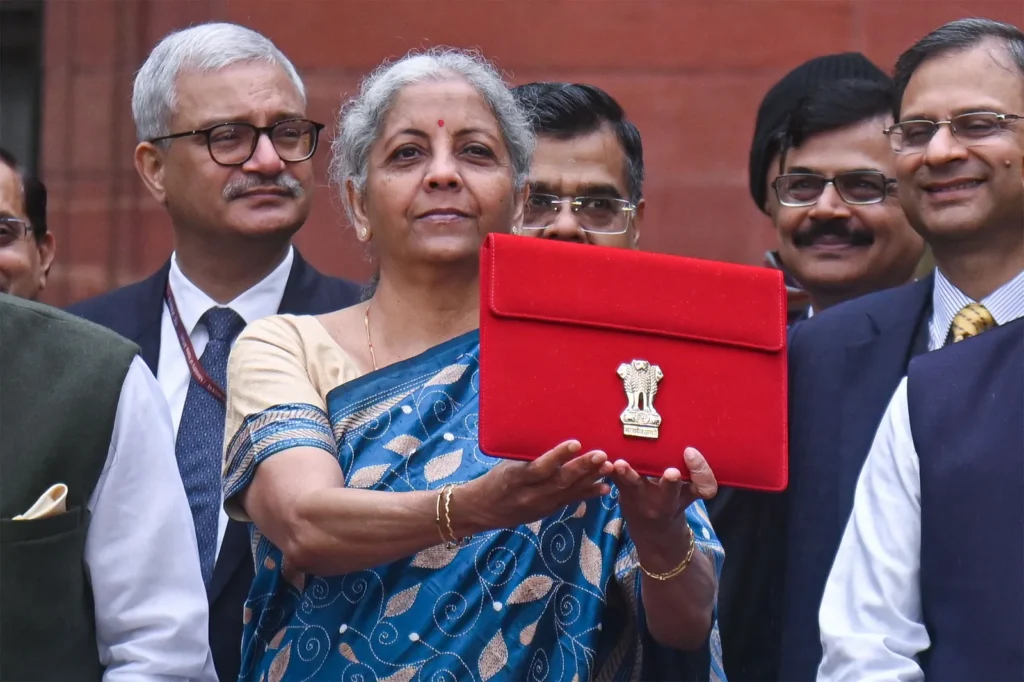
India’s Union Budget 2026-27, presented by Finance Minister Nirmala Sitharaman on January 31, 2026, in the Lok Sabha, emphasizes sustainable growth, infrastructure, and tax reforms under the Viksit Bharat vision. This budget maintains fiscal discipline while boosting capex and MSMEs, directly addressing trending searches like “budget 2026 highlights,” “income tax slab,” and “new tax regime slabs.” Salaried individuals, small businesses, and investors gain from simplified taxes and targeted incentives.
Budget Key Figures
Public capex rises to ₹12.2 lakh crore, up 9% from last year’s ₹11.2 lakh crore, fueling infra projects like seven high-speed rail corridors (e.g., Mumbai-Pune, Delhi-Varanasi). Fiscal deficit targets 4.3% of GDP, down from 4.4%, with states receiving ₹1.4 lakh crore in tax devolution. Defence budget hits ₹7.85 lakh crore (15% hike), prioritizing modernization.
Income Tax Slab Updates
No major slab revisions in the new tax regime for FY 2026-27 (AY 2027-28), but the new Income Tax Act 2025 (effective April 1, 2026) simplifies compliance with fewer forms and penalties. Slabs carry forward from FY 2025-26, offering rebate up to ₹12 lakh income via ₹60,000 under Section 87A.
| Income Range (₹) | New Regime Rate | Old Regime Rate |
| 0 – 4 lakh | Nil | Nil |
| 4 – 8 lakh | 5% | 5% |
| 8 – 12 lakh | 10% | 15% (above 10L) |
| 12 – 16 lakh | 15% | 20% |
| 16 – 20 lakh | 20% | 20% |
| 20 – 24 lakh | 25% | 30% (above 15L) |
| Above 24 lakh | 30% | 30% |
Standard deduction hiked to ₹75,000 for salaried; NPS employer contribution limit up to 14% of salary.
New Tax Regime Benefits
Default new regime provides relief for incomes up to ₹12 lakh (zero tax post-rebate). Marginal relief for slight exceedances; old regime retained for those needing exemptions like HRA. Use online calculators for FY 2026-27 planning—ideal for tech creators tracking irregular incomes.
TCS and TDS Relief
LRS TCS on foreign spends drops to 2% from 20%/5%, easing overseas education/travel. TDS on labor/manpower services clarified at 1-2%; simplified for MSMEs. Share buyback taxed as capital gains at shareholder level.
MSME and SME Push
₹10,000 crore fund for “Champion MSMEs” with equity support; mandatory TReDS for CPSE payments. Self-Reliance Fund topped ₹4,000 crore; incentives for textiles, chemicals.
Infra and Sector Boosts
- Railways: 7 corridors, Vande Bharat expansion.
- Semiconductors: Mission 2.0, rare earth magnets scheme.
- Agriculture: Cashew/coconut global branding, 500 reservoirs for fisheries.
- Data centres: Tax holiday till 2047 for foreign firms via Indian resellers.
Defence gets priority; 3 new Ayurvedic AIIMS announced.
Implications for Salaried and Investors
Middle-class eyes standard deduction boost; no 30% slab shift to ₹40L yet. Tech/gaming bloggers benefit from MSME funds for content tools; fiscal prudence signals stable markets. Download PDF from indiabudget.gov.in: Budget Speech, Finance Bill, Highlights.
Economic Outlook
GDP growth steady at 6.5-7%; focus on manufacturing, employment via skilling (e.g., Divyang Kaushal Yojana for IT/hospitality). This budget balances growth with prudence—no big-bang tax cuts but steady reforms.
For Bankura creators like you, use these for Hinglish scripts: “Budget 2026 me salaried logon ke liye kya hai naya?” Optimize SEO with keywords like “bajat 2026 income tax slab.
India’s Union Budget 2026-27 offers targeted relief for the middle class through tax simplifications, reduced compliance burdens, and cost-of-living measures, even without major slab changes. Salaried individuals earning up to ₹12 lakh continue enjoying zero tax liability under the new regime (with ₹60,000 rebate under Section 87A), now extended effectively to ₹12.75 lakh including the hiked standard deduction of ₹75,000.
Tax Filing Ease
The new Income Tax Act, 2025 (effective April 1, 2026), automates NIL deduction certificates and staggers ITR deadlines—individuals till July 31, businesses till August 31—cutting paperwork for salaried taxpayers. Depositories now handle Form 15G/15H for TDS on dividends/interest via a single window, simplifying senior citizens’ and small savers’ processes.
Lower TCS on Remittances
TCS on overseas tour packages drops to 2% (from 5-20%), and LRS for education/medical to 2% (from 5%), saving middle-class families thousands on foreign trips or kids’ studies abroad.
Cheaper Essentials and Healthcare
Customs duty exemptions on 17 cancer drugs and medicines for seven rare diseases make treatments more affordable for families. Duties cut on mobile components, microwave/TV parts, leather goods, and footwear reduce gadget and daily item costs.
Indirect Savings Boosts
No tax on Motor Accident Claims Tribunal interest; TDS removed, aiding accident victims. Share buybacks taxed as capital gains (not dividends) protects retail investors from higher payouts tax. NPS employer contribution limit rises to 14% of salary, enhancing retirement savings.
Job and Growth Opportunities
₹12.2 lakh crore capex (9% up) in infra, railways (7 corridors), and tourism creates jobs in sectors like tech and logistics, benefiting urban middle-class professionals. MSME funds indirectly support small creators via easier credit.
These steps prioritize stability over big cuts, helping middle-class households in places manage rising costs while planning investments—use updated calculators for FY 2026-27.